 copy.jpg)
ECI Desk
Editors Club of India Forms Advisory Wing, Charts New Policy-Driven Future for Indian Media
New Delhi: With the objective of empowering journalism and making it more responsible and globally competent, the Editors Club of India organized a significant and historic event at the India International Centre, New Delhi. The dignified gathering, attended by eminent personalities from the administrative, judicial, security, medical, educational, and media sectors, turned into a meaningful national-level discourse.
During the program, National President Amitabh Agnihotri formally announced the Advisory Wing of the organization. This wing will be led by senior digital media and content strategist Anurag Verma (formerly with The Times of India and Zee News), who has been appointed as its Chairperson. The wing will play a central role in shaping the club’s policy direction, offering guidance on complex national and international media issues, and establishing a responsible dialogue between media and society.
The Advisory Wing includes highly experienced and distinguished personalities from diverse fields such as administration, law, security, education, healthcare, and media.
Key members include:
The event was successfully conducted by Senior Vice President Sanjay Giri. Distinguished guests and members were warmly and gracefully welcomed by National General Secretary Dr. Sunil Kaushik, Vice President Arvind Singh, Treasurer Satendra Bhati, and Organization Secretary Naresh Vashishtha.
The formation of the Advisory Wing is not merely a formal structure but a serious initiative to shape the future of journalism. It will provide concrete recommendations on sensitive issues such as press freedom, journalist safety, fake news control, media ethics, policy-making, and the protection of democratic values.
Chairperson Anurag Verma, in his address, stated that this Advisory Wing is not just a formal body but a powerful intellectual platform that will guide the future of journalism. He highlighted that the media is currently undergoing an unprecedented phase of transformation, where credibility, ethics, and independence have emerged as the biggest challenges. In such times, bringing together experienced experts from administration, judiciary, security, healthcare, and social sectors was essential.
He expressed confidence that this wing will establish the Editors Club of India as an influential institution by providing direction in policy-making, guidance, and balanced perspectives on national issues. He emphasized that the aim of the Advisory Wing is to strengthen trust between media and society, offer practical suggestions to safeguard journalists’ rights, and promote responsible, nation-oriented journalism.
Calling for active participation from all members, he said that when experience and ideas work in a unified direction, meaningful change is inevitable. He added that the Editors Club of India will emerge as a center for positive and long-term transformation in the media sector, with the Advisory Wing playing a decisive role.
The wing also aims to foster healthy dialogue between the media and governance systems, safeguard journalists’ rights through practical measures, and strengthen the credibility of journalism in the evolving digital era. It will also contribute to developing a long-term policy framework for media, keeping national interests in focus.
National General Secretary Dr. Sunil Kaushik, while expressing gratitude to all guests and members, elaborated on the structure, objectives, and future roadmap of the Editors Club of India. He stated that the club is not just a platform for dialogue but is working toward becoming a movement for the restructuring of journalism.
He also announced that a special committee will soon be formed to address contemporary challenges and propose reforms for restructuring the Indian press system.
In his presidential address, Amitabh Agnihotri noted that the media today is facing multiple challenges—credibility, independence, financial pressures, and digital transition—which have impacted the core spirit of journalism. He emphasized that the responsibility of the Editors Club of India goes beyond organizational expansion; it includes preparing a concrete blueprint to safeguard media freedom.
He called for active participation from all members of the Advisory Wing, stating that their experience and guidance will provide a new direction to journalism. He stressed that a strong democracy requires an independent, responsible, and fact-based media, and that the Editors Club of India is committed to this mission.
This event is being seen not merely as a formal announcement but as a structured step toward positive change in the Indian media landscape. The convergence of administrative experience, judicial insight, security perspective, medical expertise, and media leadership is expected to play a crucial role in making journalism more responsible, balanced, and effective in the future.
The Editors Club of India also clarified that in the coming time, it will continue to bring together editors, journalists, and media institutions across the country on a common platform to strengthen journalistic standards, promote a culture of dialogue, and safeguard democratic values.
During the program, National President Amitabh Agnihotri formally announced the Advisory Wing of the organization. This wing will be led by senior digital media and content strategist Anurag Verma (formerly with The Times of India and Zee News), who has been appointed as its Chairperson. The wing will play a central role in shaping the club’s policy direction, offering guidance on complex national and international media issues, and establishing a responsible dialogue between media and society.
The Advisory Wing includes highly experienced and distinguished personalities from diverse fields such as administration, law, security, education, healthcare, and media.
Key members include:
- Yogendra Narayan (Retd. IAS, former Secretary-General of Rajya Sabha),
- M. Madan Gopal (Retd. IAS, former Additional Chief Secretary, Karnataka Govt.),
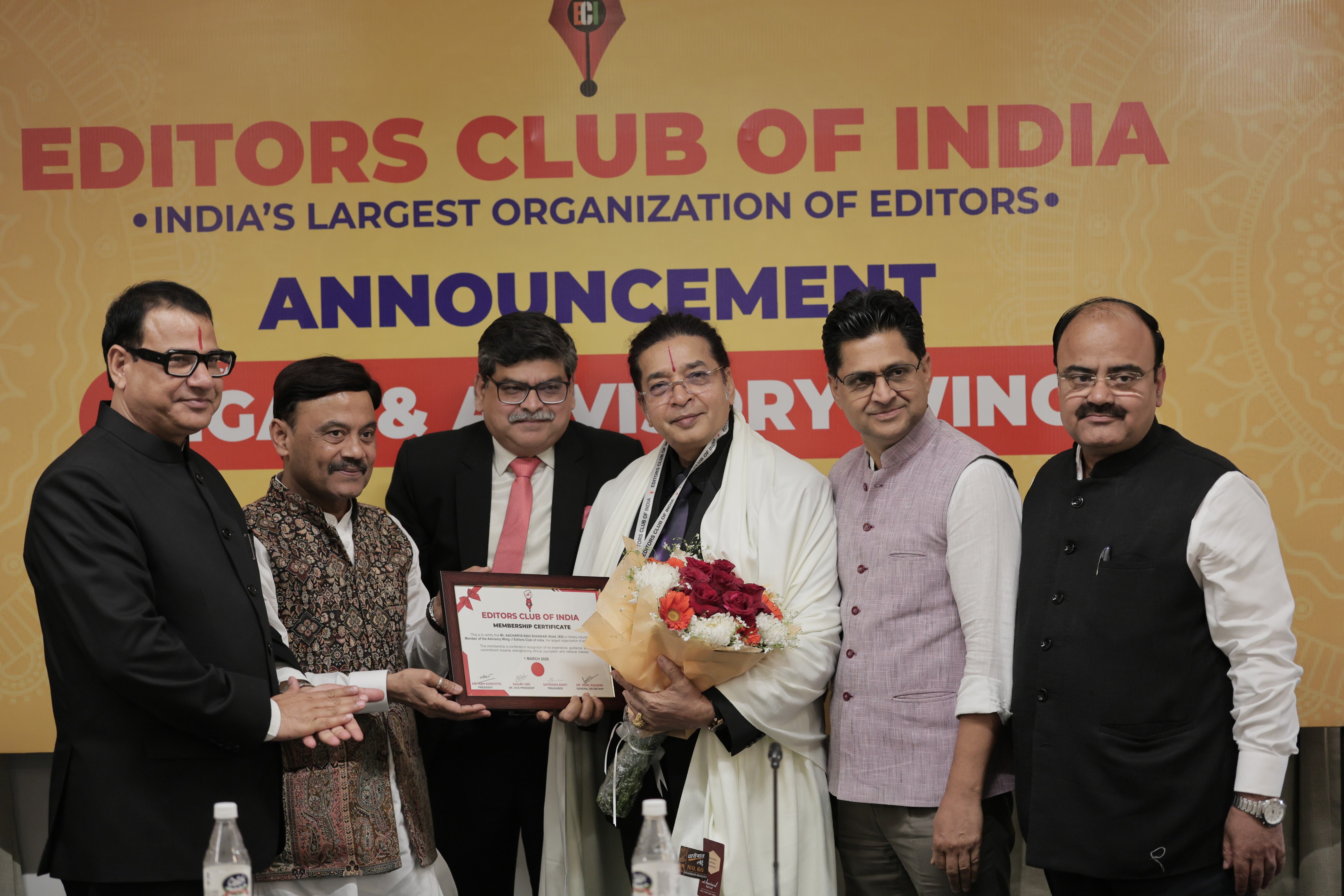
- Acharya Ravi Shankar Gupta (Retd. IAS, former Secretary, Govt of Uttar Pradesh & motivational speaker),
- Mahendra Modi (Retd. IPS, former DGP, Uttar Pradesh),
- Kumar Alok (Retd. IAS, former Chief Secretary, Tripura),
- S.K. Saxena (Retd. IAS, former Secretary, Delhi Govt),
- Subhash Chandra Batra (former CBI judge),
- Professor Triveni Singh (former IPS, Uttar Pradesh),
- Ved Prakash Sharma (Co-Chairman, Bar Council of India),
- Padma Shri Dr. K.K. Sethi (Chairman, DHLI),
- Padma Shri Dr. Sanjeev Bagai (Chairman, Nephron Clinic),
- Dr. Anand Kumar Pandey (Director, Max Super Speciality Hospital, Ghaziabad),
- Dr. G.C. Vaishnava (Medanta Hospital, Noida),
- Dr. D.K. Gupta (Chairman, Felix Hospital, Noida),
- Dr. Rajesh Hassija (Director, Indraprastha Group of Schools),
- J.K. Tripathi (Retd. IFS, former Ambassador to Zimbabwe),
- Ram Kripal Singh (former Executive Editor, NBT),
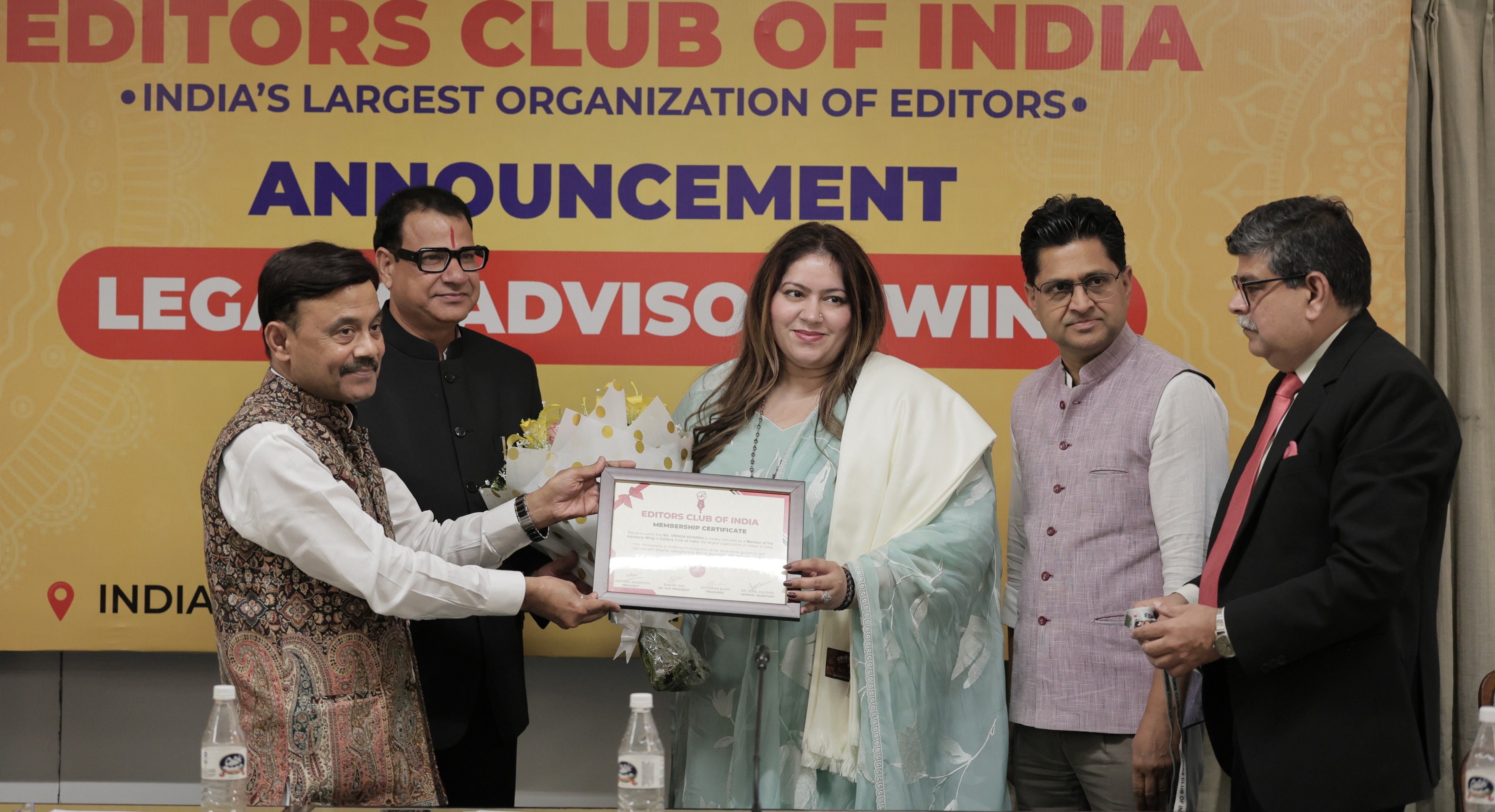
- Ms. Vrinda Khanna (National Secretary, Sant Ishwar Foundation), and
- Sunil Dutt Goyal (Director General, Chamber of Commerce & Industry).
The event was successfully conducted by Senior Vice President Sanjay Giri. Distinguished guests and members were warmly and gracefully welcomed by National General Secretary Dr. Sunil Kaushik, Vice President Arvind Singh, Treasurer Satendra Bhati, and Organization Secretary Naresh Vashishtha.
The formation of the Advisory Wing is not merely a formal structure but a serious initiative to shape the future of journalism. It will provide concrete recommendations on sensitive issues such as press freedom, journalist safety, fake news control, media ethics, policy-making, and the protection of democratic values.
Chairperson Anurag Verma, in his address, stated that this Advisory Wing is not just a formal body but a powerful intellectual platform that will guide the future of journalism. He highlighted that the media is currently undergoing an unprecedented phase of transformation, where credibility, ethics, and independence have emerged as the biggest challenges. In such times, bringing together experienced experts from administration, judiciary, security, healthcare, and social sectors was essential.
He expressed confidence that this wing will establish the Editors Club of India as an influential institution by providing direction in policy-making, guidance, and balanced perspectives on national issues. He emphasized that the aim of the Advisory Wing is to strengthen trust between media and society, offer practical suggestions to safeguard journalists’ rights, and promote responsible, nation-oriented journalism.
Calling for active participation from all members, he said that when experience and ideas work in a unified direction, meaningful change is inevitable. He added that the Editors Club of India will emerge as a center for positive and long-term transformation in the media sector, with the Advisory Wing playing a decisive role.
The wing also aims to foster healthy dialogue between the media and governance systems, safeguard journalists’ rights through practical measures, and strengthen the credibility of journalism in the evolving digital era. It will also contribute to developing a long-term policy framework for media, keeping national interests in focus.
National General Secretary Dr. Sunil Kaushik, while expressing gratitude to all guests and members, elaborated on the structure, objectives, and future roadmap of the Editors Club of India. He stated that the club is not just a platform for dialogue but is working toward becoming a movement for the restructuring of journalism.
He also announced that a special committee will soon be formed to address contemporary challenges and propose reforms for restructuring the Indian press system.
In his presidential address, Amitabh Agnihotri noted that the media today is facing multiple challenges—credibility, independence, financial pressures, and digital transition—which have impacted the core spirit of journalism. He emphasized that the responsibility of the Editors Club of India goes beyond organizational expansion; it includes preparing a concrete blueprint to safeguard media freedom.
He called for active participation from all members of the Advisory Wing, stating that their experience and guidance will provide a new direction to journalism. He stressed that a strong democracy requires an independent, responsible, and fact-based media, and that the Editors Club of India is committed to this mission.
This event is being seen not merely as a formal announcement but as a structured step toward positive change in the Indian media landscape. The convergence of administrative experience, judicial insight, security perspective, medical expertise, and media leadership is expected to play a crucial role in making journalism more responsible, balanced, and effective in the future.
The Editors Club of India also clarified that in the coming time, it will continue to bring together editors, journalists, and media institutions across the country on a common platform to strengthen journalistic standards, promote a culture of dialogue, and safeguard democratic values.